

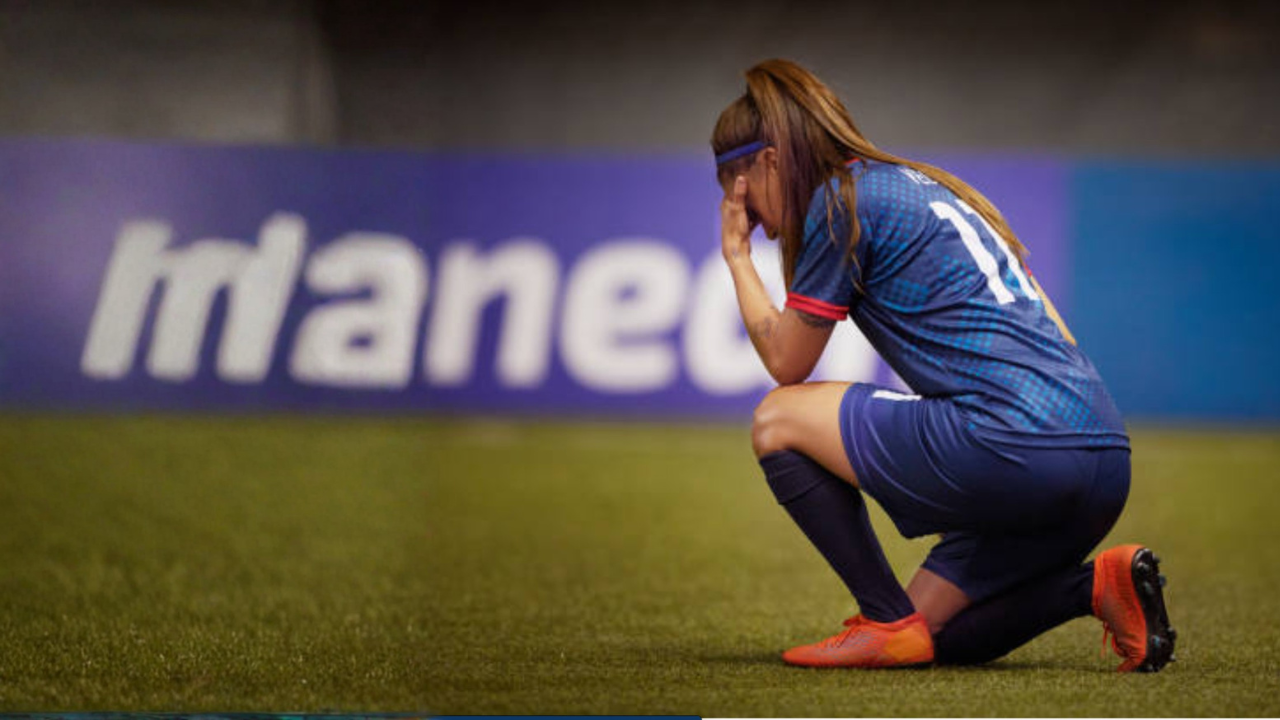


Why “I failed” is not the same as “I am a failure”
Let’s clear something up right away.
Failing is an event.
A failure is an identity.
And those two are not the same thing.
One is feedback.
The other is a label.
The problem with teenage athletes—honestly, adults too—is that we blur those lines. We miss a shot. We drop a ball. We bomb a test. We make a bad decision. And suddenly the internal voice says:
“I am bad.”
No.
You did bad.
You are not bad.
That distinction matters.
Because the goal is not avoiding failure.
The goal is shortening the recovery time and extracting the lesson.
That’s what I call failure literacy—and it’s one of the most important skills we can teach young athletes.
Why Failure Literacy Matters
Every athlete you respect—every single one—has failed thousands of times.
The difference isn’t talent.
The difference is interpretation.
When a teen interprets failure as identity, they shrink.
When they interpret failure as information, they grow.
So instead of simply telling kids, “It’s okay to fail,” we do something more effective:
- We give them language
- We give them categories
- We give them control
When athletes can name the type of failure they’re experiencing, they can navigate it instead of being overwhelmed by it.
There are four major types of failure teens experience. Let’s break them down.
1. Calibrate: Skill Failure
This is the most common—and the least dangerous—type of failure.
Calibration failures are the thousands of imperfect reps that happen while learning a skill. You’re finding your groove. You’re adjusting.
Think of a shooting range cluster. You want the shots tight. If one drifts left, you don’t panic—you adjust the next one.
That’s not the end of the world.
That’s skill refinement.
Helpful coaching language here sounds like:
- “What did that rep teach you?”
- “What’s the adjustment?”
- “Tighten the cluster.”
Calibration is not judgment.
It’s precision.
2. Climb: Process Failure
This is where discouragement creeps in if we’re not careful.
Progress is never linear. It looks more like a mountain path—up, down, up again—but trending upward.
Teen athletes struggle here because they zoom in too close. They focus on today instead of the season. Two steps forward and one step back feels like regression, but it’s not.
It’s reinforcement.
The coaching cues that matter here:
- “Zoom out.”
- “Where were you 30 days ago?”
- “Is the trend improving?”
If the trend is up, you’re climbing—even if today felt like a stumble.
3. Consequences: Choice Failure
This one is uncomfortable—but necessary.
These are failures tied to decisions. The moments where we knew better…and did it anyway.
Skipping or being late for workouts.
Breaking team rules.
Disrespecting teammates.
Cutting corners.
This is where maturity develops—not through punishment alone, but through ownership.
I like the image of a fork in the road here. One path is labeled Discipline. The other is Regret. Every decision asks the same question:
Pain now… or pain later?
The coaching language here isn’t shame. It’s accountability:
- “What choice led here?”
- “Who else was affected?”
- “What will you do differently next time?”
Consequences don’t define teens.
How they respond to them does.
4. Circumstances: Uncontrollable Failure
This is the hardest one emotionally.
Injuries.
Bad calls.
Weather.
Family situations.
Things completely outside an athlete’s control.
This is where bitterness or resilience gets chosen.
My favorite visual is a sailboat. You don’t control the wind—but you do control the sail.
What we teach athletes here is simple but powerful:
- Extract the lesson
- Keep the gratitude
- Release the resentment
Ask:
- “What was in your control?”
- “What did this teach you?”
- “How are you stronger because of it?”
Circumstances don’t build excuses.
They build perspective—if we let them.
Failure Is Feedback, Not Identity
Every failure fits into one of these four categories:
- Calibration
- Climb
- Consequences
- Circumstances
None of them are identity.
Failure is feedback.
Identity is a decision.
You are not the missed shot.
You are the athlete who adjusts the next one.
And for coaches, this is the real work. Our job isn’t to protect kids from failure—it’s to teach them how to interpret it.
Because when athletes learn to fail correctly:
- They recover faster
- They think clearer
- They own their growth
We don’t avoid failure.
We use it.
%20(1).png)
Raise the Game
If you’re ready to modernize your coaching, deepen your impact, and develop athletes who become leaders—not just performers—this course is your playbook.
Share this blog with a coach who needs it.
Drop me an email if this message hit home.
Your athletes are waiting for a coach who understands their language…
A coach who can connect, communicate, and elevate.
Let’s raise the game—together.