

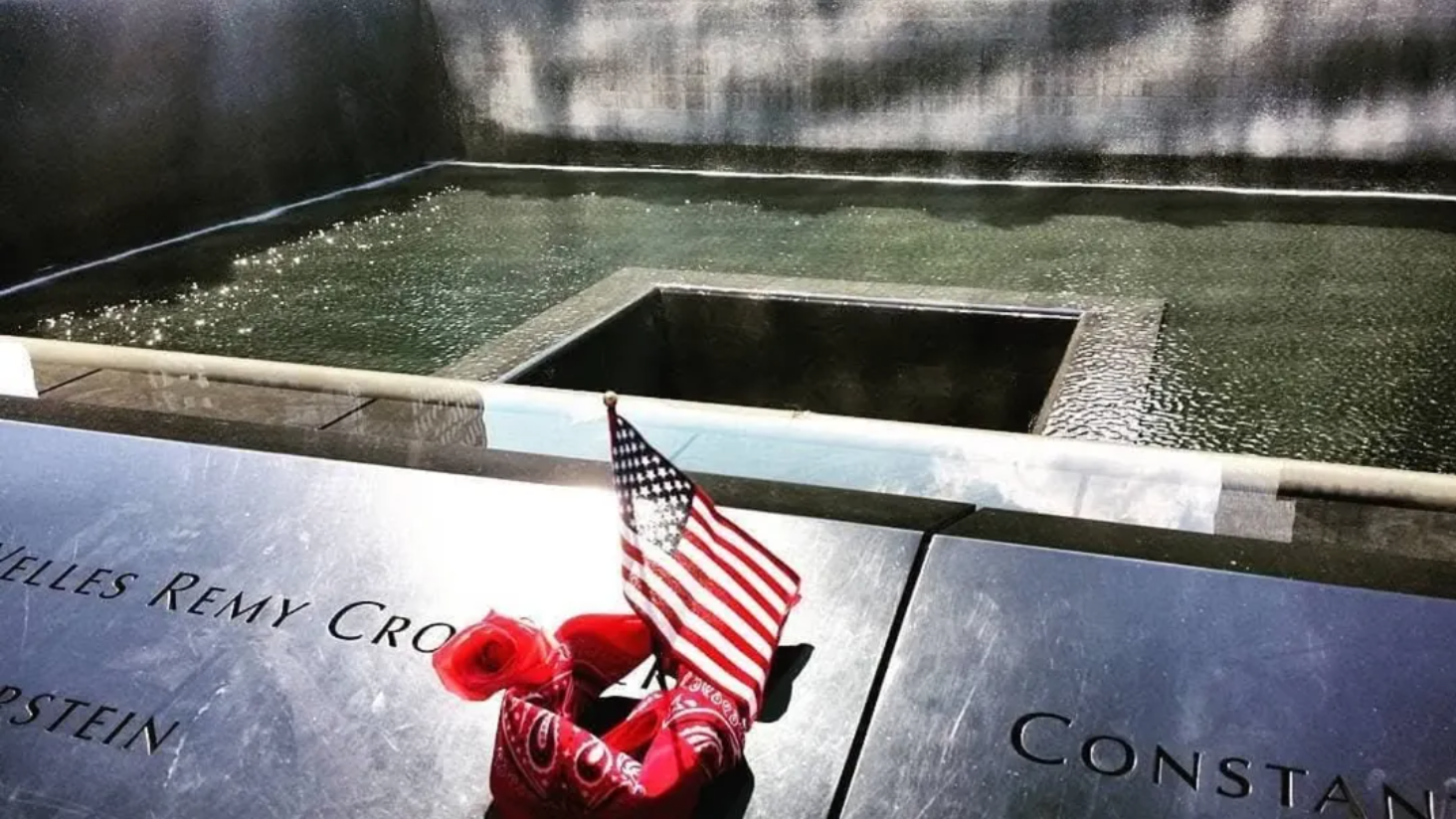


In 2010 I visited my sister in New York City. We walked through the World Trade Center site to check out the memorial fountains. Seeing all the names engraved around the fountain is a very humbling moment. I walked past a name with a small American flag stood up on the last letter of a last name, resting wrapped around the flag was a red bandana. The sun was creeping through the buildings, water was flowing from the fountain and I thought, wow, I want to capture this moment. I took a picture because I thought it looked badass. I had no idea who the name was and what that bandana meant.
Years later I learned the story behind that red bandana and the connection it had to my life and who I aim to be.
The bandana belongs to Welles Crowther. And once you know who he was, you can't unsee the lessons he left for every one of us who has ever pulled on a jersey and called ourselves a leader.
Who Was Welles Crowther
Crowther grew up in Nyack, New York. His father gave him a red bandana as a kid, and he carried it everywhere from that point on. He wore it under his lacrosse helmet at Boston College, where he played lacrosse and graduated in 1999. He trained as a volunteer firefighter back home. That instinct to serve was in him long before September 11, 2001 ever became a date anyone remembers.
By 2001, Crowther was working as an equities trader on the 104th floor of the South Tower at the World Trade Center. When the tower was struck, he had a way out. He didn't take it.
Survivors described a calm voice appearing out of the smoke, telling them exactly what to do. "Follow me. I know the way." He led one group down 17 flights of stairs to safety, then turned around and went back up. He did it again. And again. He carried a woman on his back. He organized strangers into a line and kept them moving. Nobody knew his name that day. They only knew the bandana over his face.
Crowther is credited with saving as many as 18 lives before the tower collapsed. He was 24 years old.
The Player Underneath the Legend
Here's the part I want every coach and captain reading this to sit with. Crowther wasn't a firefighter that day because of a badge. He was a firefighter because of who he'd already decided to become, and lacrosse was part of that decision.
Playing college lacrosse doesn't hand you composure under pressure. It builds it, rep by rep, film session by film session, tough loss by tough loss. It teaches you to read chaos and find the next right action. It teaches you that a title doesn't make you a leader. Your response when things go sideways does.
Crowther walked into a burning building and took command without anyone appointing him. Nobody made him team captain of that stairwell. He just led, because leading was already who he was.
That's the whole argument for why sport matters. We're not just building athletes. We're building the kind of person who runs back into the fire for somebody else.
What We Pull From His Selflessness
Leadership is a decision you make before the moment asks for it. Crowther didn't decide to be brave on 9/11. He'd been deciding it for years, on a practice field in Chestnut Hill, in a firehouse in Nyack. The moment just revealed what was already there.
Real leaders go back for the group. Crowther had a clear path to safety and used it to save himself first. Then he turned around. Every captain reading this has faced a smaller version of that choice: keep moving for yourself, or go back for a teammate who's struggling. Crowther chose the second option seven times before the tower came down.
Calm is a skill, not a personality trait. Survivors remember his voice more than anything else. Steady. Direct. In control when nothing else was. That's coachable. That's trainable. That's what we're actually building when we run kids through pressure situations in practice.
You don't need a title to lead. Nobody gave Crowther a rank that day. He wasn't a firefighter on duty or a manager at his firm. He was a guy with a bandana who decided people needed help and he was going to give it. Leadership shows up in the gap between what's required of you and what you choose to do anyway.
Carry the Bandana
I've sharedthis photo from 2010 on 9/11 for over a decade without knowing what it really was. Now I know it's a symbol of a former lacrosse player who turned everything the game taught him into the reason 18 people got to go home to their families.
Take a moment today to remember Welles Crowther. Then go be the kind of teammate, captain, or coach who'd do the same thing he did, in whatever smaller fire shows up in front of you this week.
We will always remember. We will always be proud. We will always be prepared, so we may always be free.
Here's to you, Welles.